3D Puff Embroidery: What It Is, When It Works, and How It's Digitized
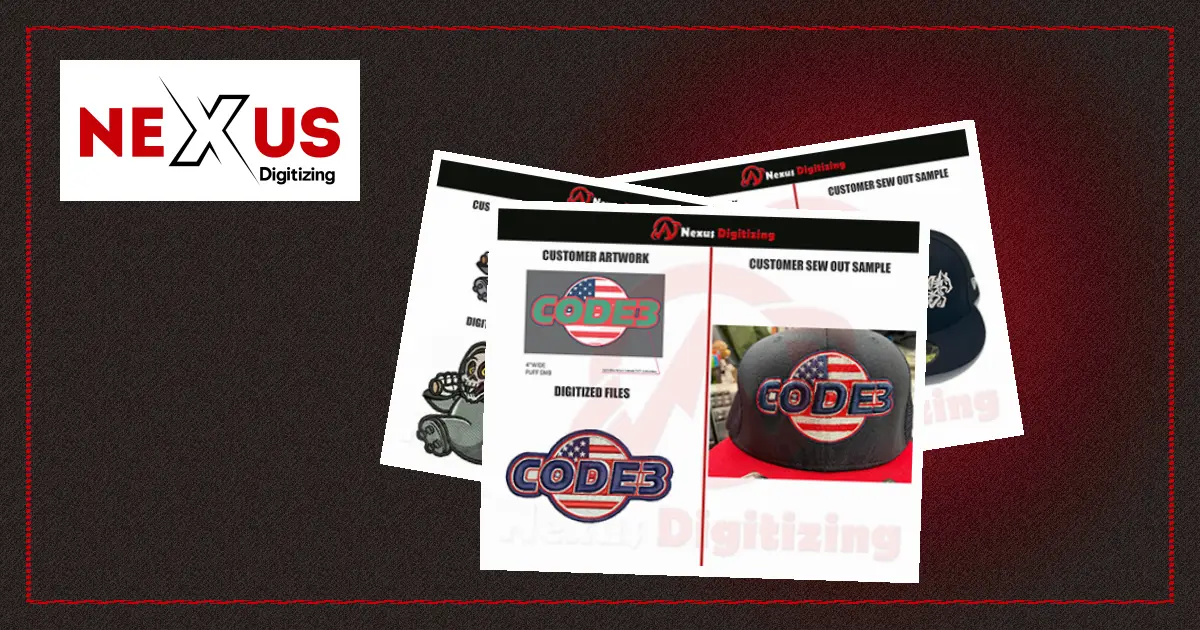
Bold, raised lettering on the front of a snapback is one of the most recognizable looks in custom headwear. That's 3D puff embroidery, and when it's done properly it makes a logo look premium and dimensional. When it's done badly, you get fuzzy edges, foam poking out and lumpy letters.
Here's how it works and what makes the difference.
What is 3D puff embroidery?
3D puff places a layer of special embroidery foam on the garment, then stitches dense satin columns over it. The needle perforates the foam along the edges of the design, so the excess tears away cleanly afterward. What's left is the foam trapped under the thread, which creates a raised, sculpted look.
Foam usually comes in thicknesses of around 2–3 mm, and you should always choose a color that matches the thread.
Why it needs specialist digitizing
You can't add foam to an ordinary embroidery file and expect good results. 3D puff digitizing is different in several ways:
- Satin stitches only. Fill stitches flatten the foam, so puff areas are built from satin columns.
- Higher density. Stitches sit closer together to cover the foam completely.
- Closed ends ("caps"). The ends of letters and shapes get extra stitches, so foam doesn't peek out.
- Minimal underlay. Too much underlay crushes the foam before it's covered.
- Clean cutting passes. Edge stitches are planned to perforate the foam so it tears away neatly.
- Smart sequencing. Any flat embroidery runs first, then the machine pauses to add foam, and then the puff areas stitch.
Designs that work, and ones that don't
Works well
- Bold, block-style letters and numbers
- Simple shapes and thick outlines
- Logos with clear, chunky elements
Avoid (or stitch flat)
- Thin script fonts and serif details
- Very small text
- Fine lines, tiny gaps, or highly detailed artwork
- Very wide shapes. Satins that are too wide become loose and can snag, so large areas often need splitting into narrower columns
As a rule of thumb, letters for 3D puff should be at least about half an inch tall, with strokes thick enough to hold foam.
Combining puff and flat embroidery
Some of the best cap designs mix both: a bold 3D puff word with a small flat-stitched tagline, outline or icon underneath. The contrast makes the puff stand out even more. Your digitizer plans this in a single file with the right stop for the foam.
Best sizes for caps
Structured caps have a limited stitch area. Typical front sizes are up to about 2–2.25 inches tall and around 4–5 inches wide, depending on the cap style and machine. Low-profile and unstructured caps have even less room, so check your blank before you finalize the artwork. Learn more on our cap digitizing page.
Where to use 3D puff
- Embroidered caps, snapbacks and trucker hats
- Jacket fronts and backs
- Hoodies and sweatshirts
- Bags and beanie cuffs (with sturdy fabric)
Prefer the raised look without the production hassle? 3D embroidered patches can be sewn onto any item.
Tips for a clean result
- Match foam color to thread.
- Use a sharp needle and slightly slower machine speed.
- Remove the excess foam carefully, and use a heat gun lightly to shrink any fuzz at the edges.
- Test-sew on the same fabric or cap before running the full order.
Get your 3D puff file
Send us your logo with the cap style and size, and we'll tell you honestly whether it suits 3D puff. We'll also suggest any tweaks, then deliver a puff-ready file with free edits. Order 3D puff digitizing →, or WhatsApp your design for a quick answer.
Frequently asked questions
Can any logo be made into 3D puff embroidery?
Not every logo. 3D puff works best with bold, blocky shapes and thick letters. Thin lines, small text and fine details are better stitched flat, and many designs combine puff with flat embroidery.
Can I use a regular embroidery file for 3D puff?
No. A standard file will cut the foam unevenly and leave it poking out. 3D puff needs a file digitized specifically for foam, with wider satins, higher density and closed ends.
What color foam should I use?
Match the foam to the thread color, so that any tiny gaps don't show.
Is 3D puff embroidery only for caps?
Caps are the most popular, but 3D puff also works on jackets, hoodies and bags, wherever the fabric can support the extra height.